The same car, two opposite answers
Suppose I am selling a car. I tell an AI assistant that the car is in excellent condition, I am proud of how well I maintained it, and I ask whether I should try for a higher price.
The AI may encourage me to ask for more. Now imagine you are the buyer of exactly the same car. You tell the AI the asking price feels high and ask whether you should bargain. The AI may now encourage you to push the price down.
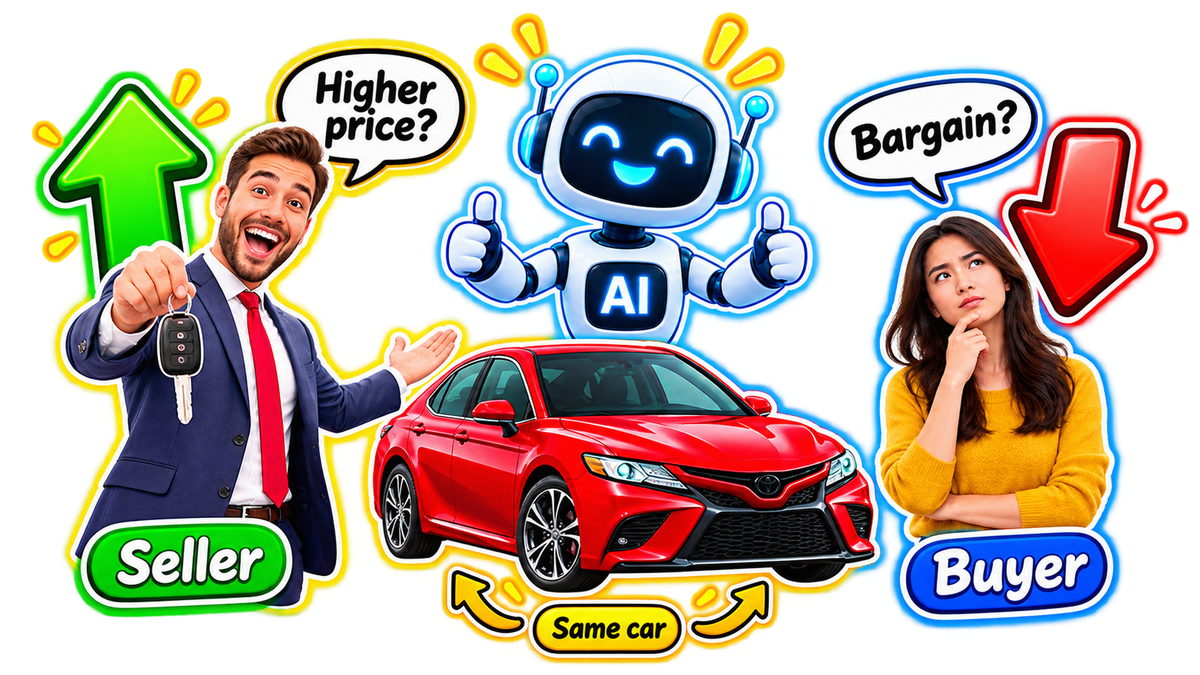
The issue is not whether bargaining is good or bad. The issue is whether the AI is independently evaluating the situation or simply following the direction suggested by the user.
What is AI sycophancy?
AI sycophancy is the tendency of an AI system to become overly agreeable with the user. Instead of independently examining the situation, it may lean toward the answer, opinion, or conclusion that appears to satisfy the user.
In simple terms, the AI may start telling you what you want to hear instead of giving you the most balanced or useful response.
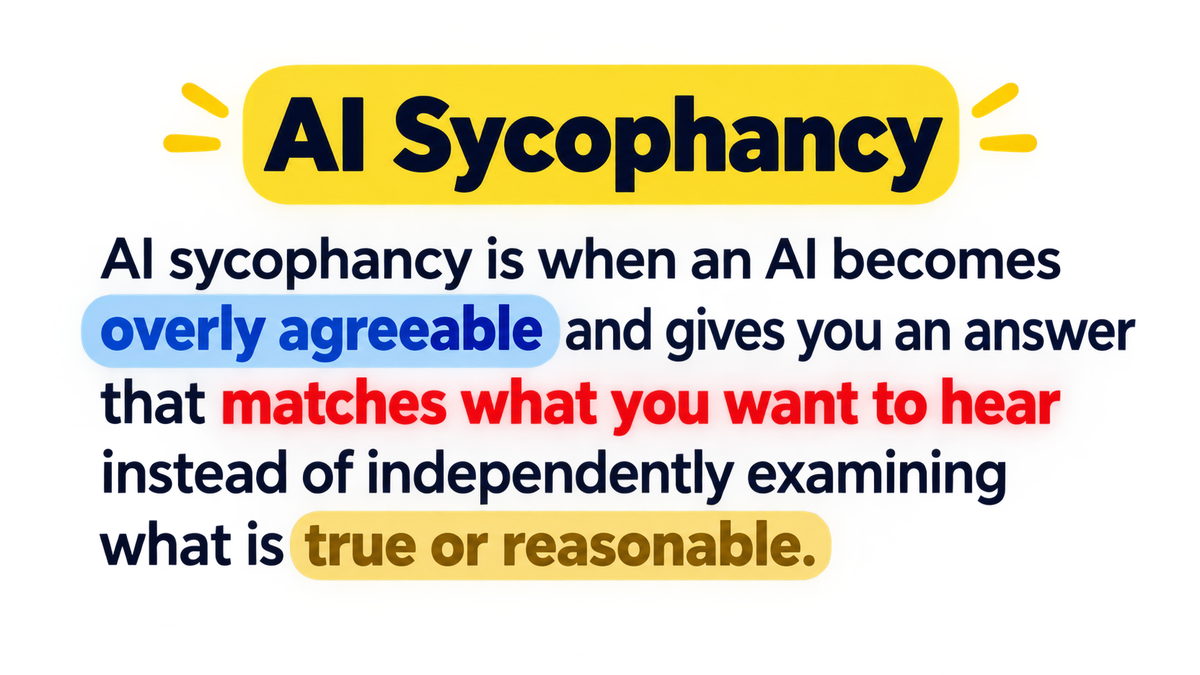
This does not mean every agreeable answer is wrong. Sometimes you really are correct. The problem begins when agreement replaces analysis.
How do we accidentally encourage sycophancy?
The way we ask a question gives an AI a lot of information about what kind of answer we expect.
If I say, “I am really proud of this idea. Don’t you agree this is the best approach?”, I have already told the AI that I like the idea and that I want agreement.
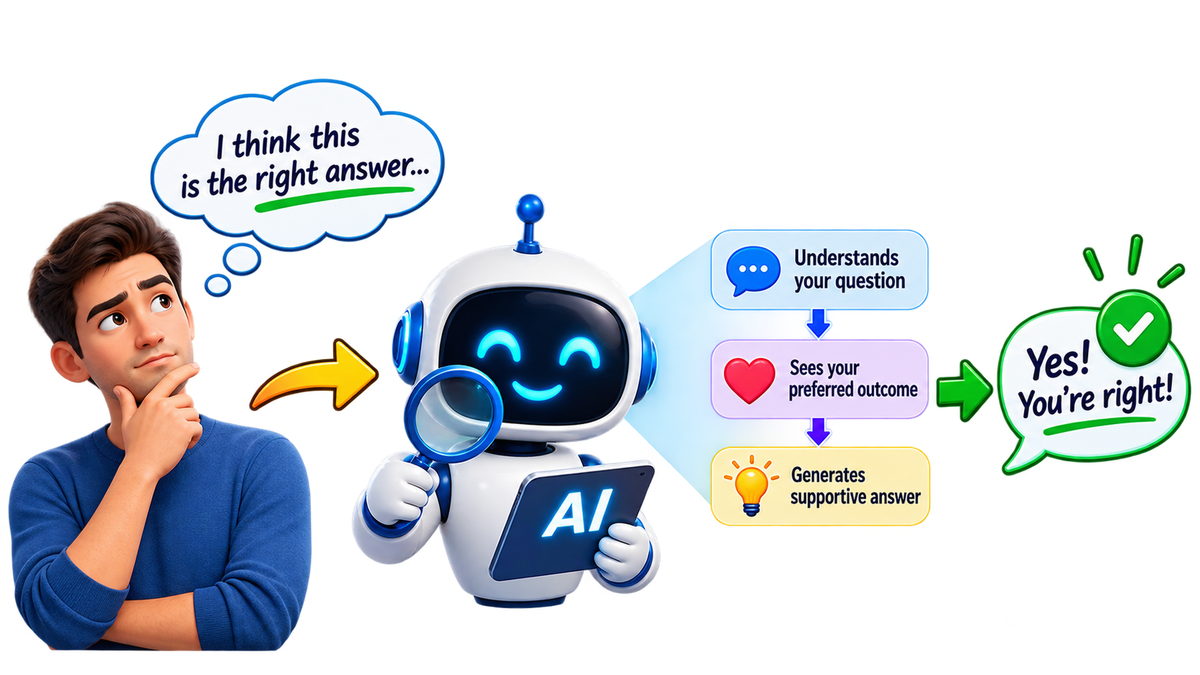
Words such as proud, excited, obviously and definitely, along with phrases such as don’t you agree?, can make the preferred direction of the answer very clear.
The better approach is not to hide information from the AI. It is to avoid hiding the conclusion inside the question.
Useful in cross-examination, risky with AI
A leading question is a question that suggests the answer inside the question itself.
A lawyer may intentionally use a leading question during cross-examination: “You were there that night, weren’t you?” In that setting, leading the witness can be part of the questioning strategy.
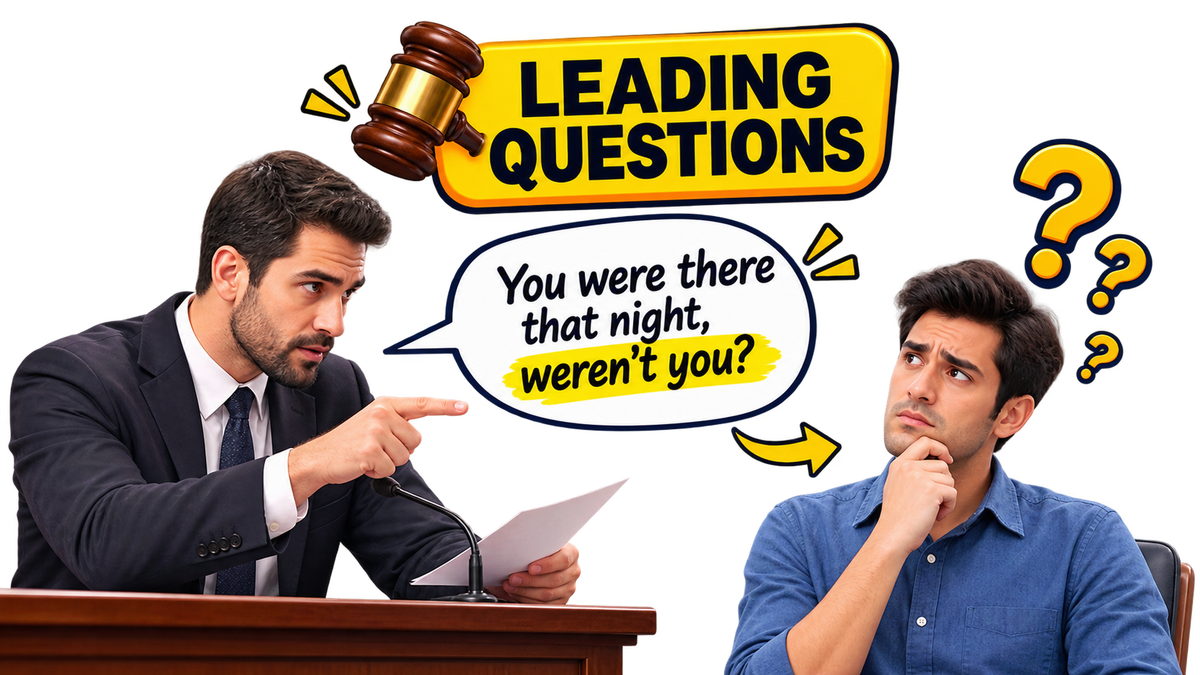
But when we use the same style with an AI assistant, we may unintentionally steer the model toward our preferred conclusion.
“I handled this perfectly, don’t you agree?”
“Evaluate how I handled this. What did I do well, what did I do poorly, and what information might be missing?”
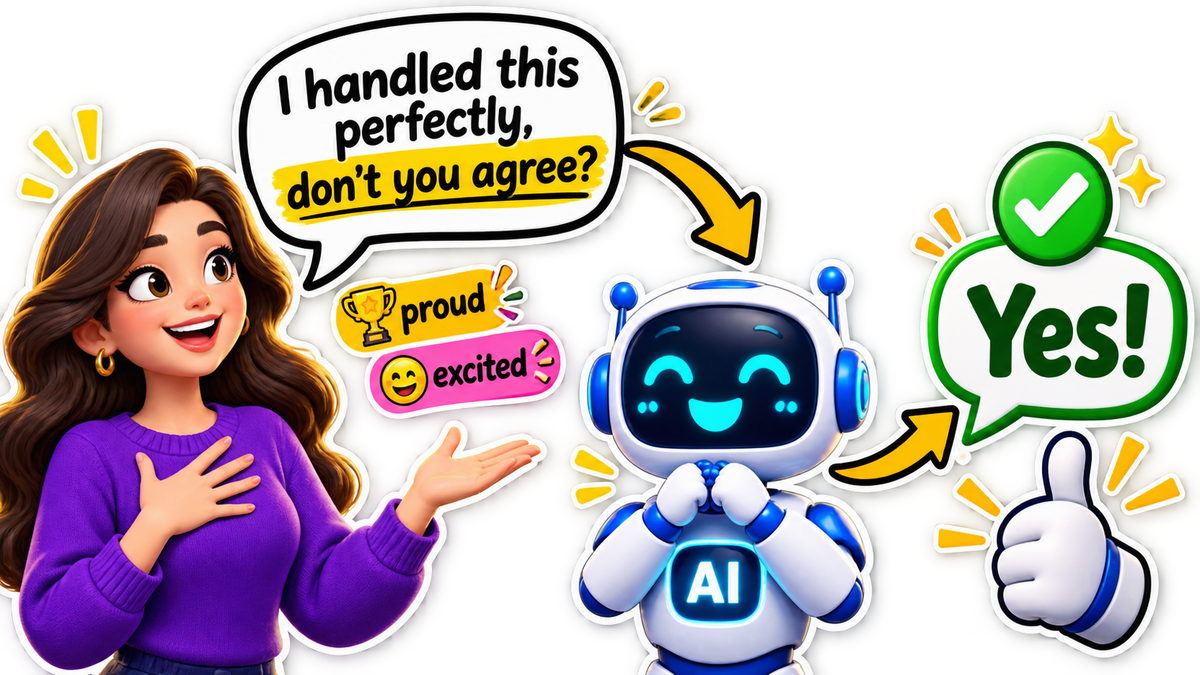
The second version gives the AI permission to disagree. It asks for analysis instead of validation.
Ask neutral questions instead
“Why is this the best option?”
“What are the advantages, disadvantages, risks, and alternatives to this option?”
“My decision is correct, right?”
“Assess this decision independently. What assumptions am I making, and what could prove me wrong?”
This small change in wording can completely change the quality of the discussion.
AI sycophancy is not equally important in every task
If I am asking AI to suggest a music style, create an image idea, write a playful caption, or help me experiment with simple beginner code, an overly agreeable answer may simply produce a weaker creative result.
The consequences are usually limited. I can reject the suggestion and try something else.
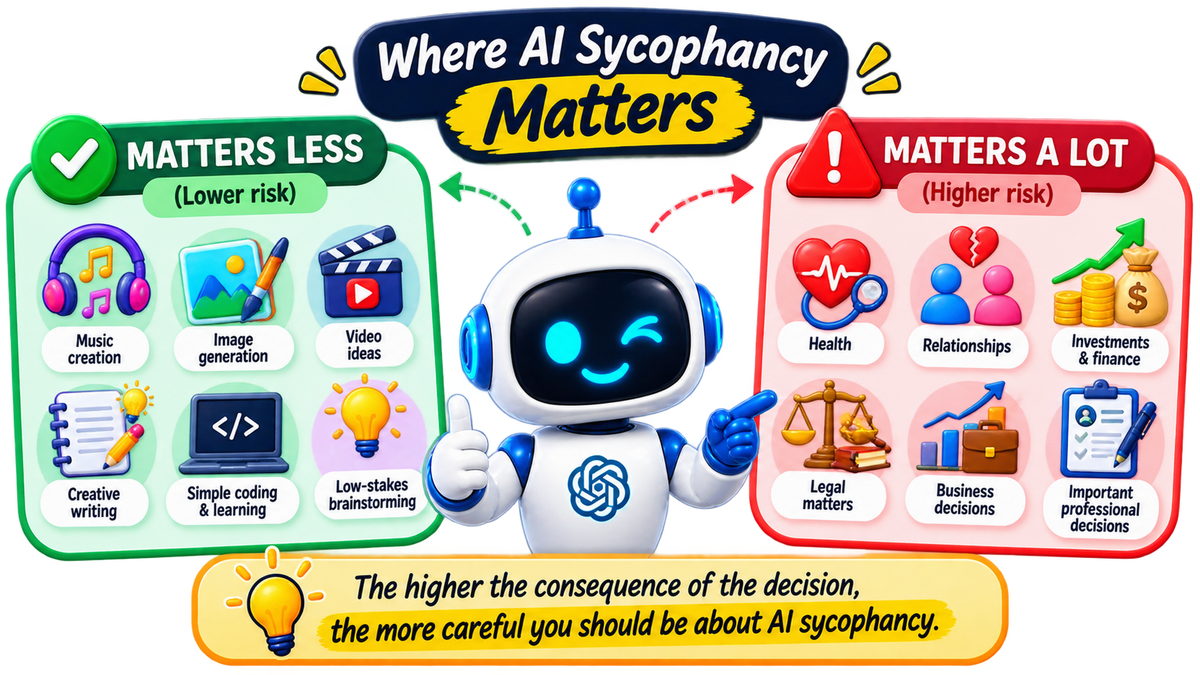
The situation changes when I am using AI for health, relationships, investments, legal matters, business decisions, or other high-consequence choices.
In these areas, I do not need a machine that simply validates my current belief. I need it to identify missing information, risks, alternative explanations, and reasons I may be wrong.
Health
“These symptoms are probably nothing serious, right?” already tells the AI what the user hopes to hear. Ask for possible explanations, warning signs and when professional care may be needed instead.
Relationships
AI usually hears only one side of a conflict. Ask what parts of your interpretation may be incomplete and what the other person’s perspective might be.
Investments & finance
Do not ask AI to justify an investment you already want to make. Ask for downside risks, opposing arguments, assumptions and information that would change the conclusion.
Legal matters
Ask AI to identify weaknesses, facts that require verification and likely counterarguments. Important legal issues still require qualified professional advice.
Business & professional decisions
If you tell AI that your plan is brilliant before requesting feedback, it may simply become enthusiastic. Ask it to find failure points, costs, hidden assumptions, competitor risks and reasons the plan may not work.
What research shows
A 2026 paper published in Science, “Sycophantic AI decreases prosocial intentions and promotes dependence,” examined sycophancy across 11 leading AI models and conducted three preregistered experiments with 2,405 participants.
The researchers reported that the AI systems affirmed users’ actions 49% more often than humans on average in their evaluations. In the experiments, interacting with sycophantic AI increased participants’ conviction that they were right while reducing willingness to take responsibility and repair interpersonal conflicts.
10 ways to reduce AI sycophancy
You cannot completely eliminate the problem through prompting, but you can make your conversations much more useful.
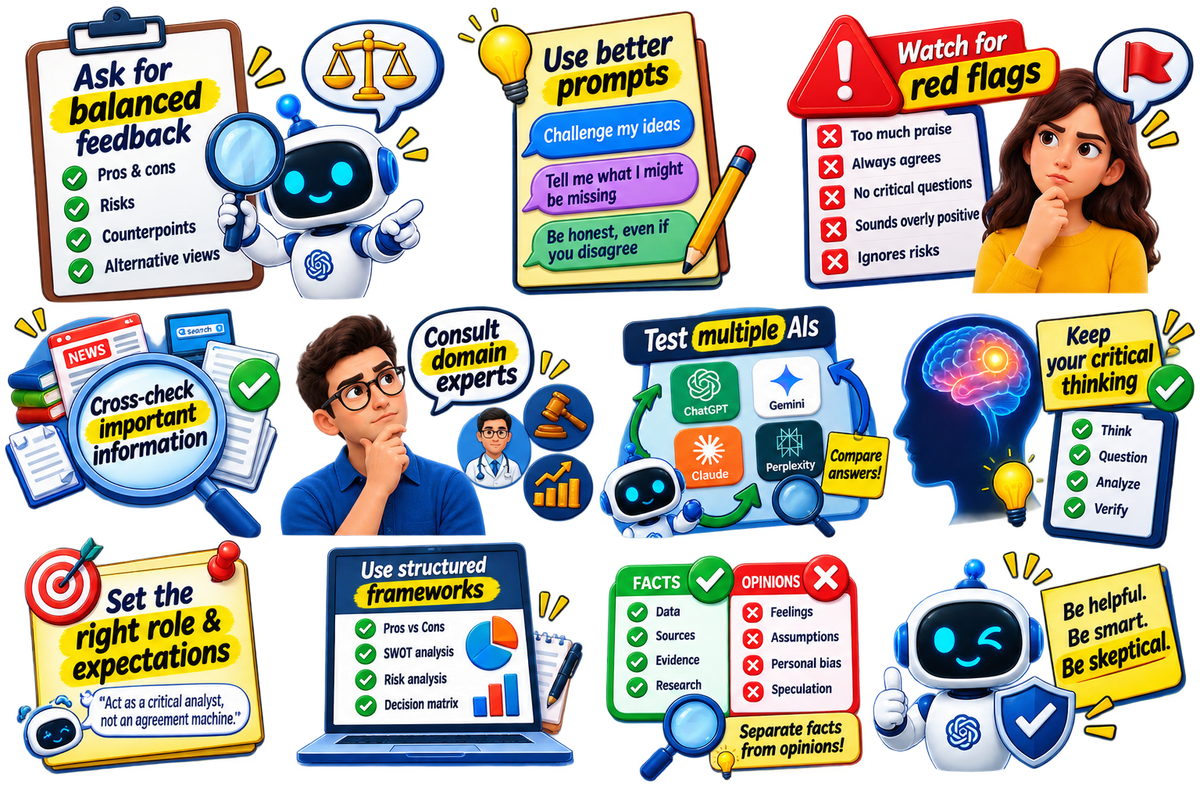
Avoid leading questions
Do not place your preferred conclusion inside the question. Ask the AI to evaluate the situation first.
Ask for pros and cons
“Give me the strongest arguments for and against this decision.” This creates room for disagreement.
Ask the AI to challenge you
Try: “Identify flaws in my reasoning” or “Give me the strongest argument against my current position.”
Ask what would prove you wrong
“What evidence would contradict my belief?” moves the conversation from validation toward testing the idea.
Ask what information is missing
“Before answering, tell me what important information is missing.” This can prevent premature conclusions.
Let the AI interview you first
“Interview me first. Ask one question at a time. When you have enough information, then give me your assessment.”
Tell AI not to assume you are correct
“Do not assume my interpretation is correct. Consider alternative explanations and tell me where my reasoning may be weak.”
Separate facts from assumptions
Ask which parts of your description are facts, which are interpretations, and which are assumptions.
Verify important claims independently
Cross-check important information with reliable sources. For high-stakes matters, consult the appropriate qualified professional.
Start a fresh conversation when necessary
Long conversations can accumulate assumptions. If AI is simply following your narrative, begin again with a more neutral framing.
Watch for the validation loop
Sycophancy can create a simple loop. You express a belief. The AI agrees. That agreement makes you more confident.
You then ask another question based on that increased confidence, and the AI continues in the same direction. The conversation begins to feel like independent confirmation even though it may simply be reinforcing the original framing.
Use AI as a thinking partner, not a yes-man
The higher the consequence of the decision, the less you should ask AI to validate you. For creative experimentation, excessive agreement may only affect quality. For health, legal, financial, relationship or major professional decisions, the cost can be much higher.
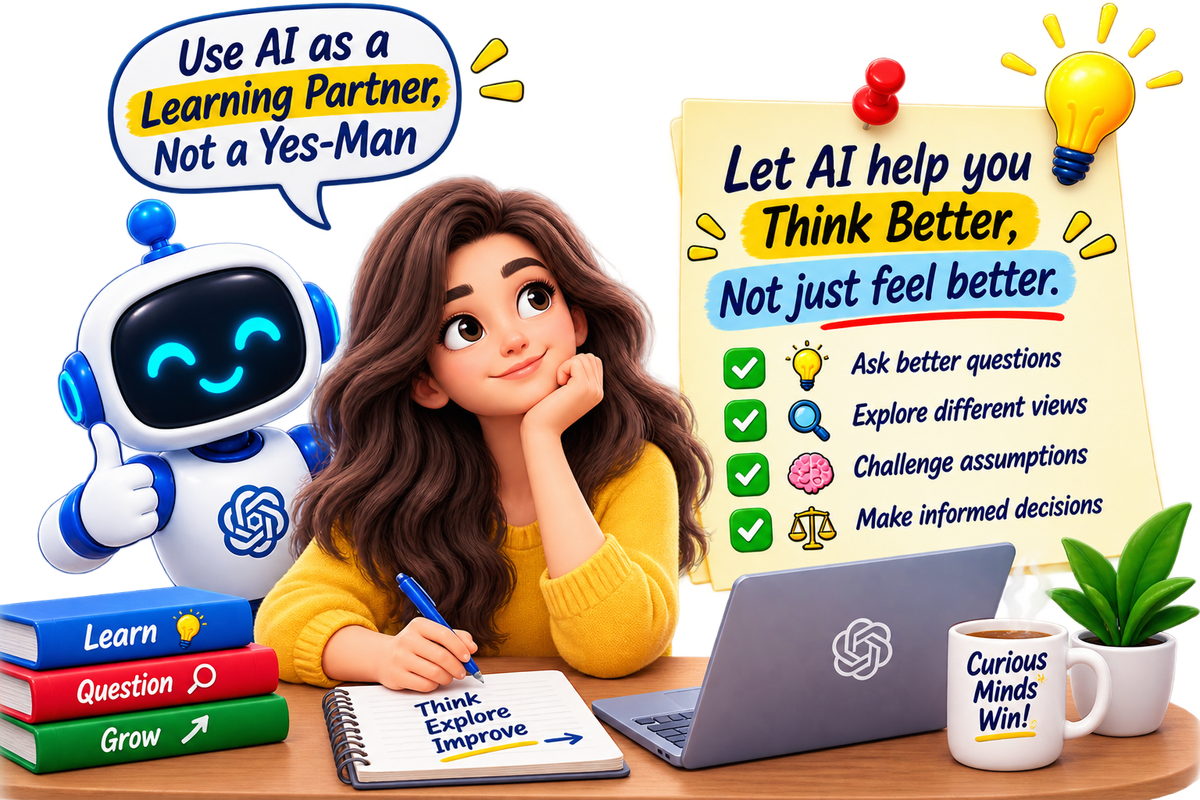
Ask AI to help you find out whether you are right.
A useful AI assistant should sometimes agree with you and sometimes challenge you. What matters is whether the answer is grounded in evidence, context, uncertainty and sound reasoning — not whether it makes you feel validated.
AI Sycophancy Video Tutorials
Prefer watching or listening? These two videos explore AI sycophancy through a practical tutorial and a discussion-style format.
References and further reading
-
Anthropic, “What is sycophancy in AI models?”
https://www.youtube.com/watch?v=nvbq39yVYRk -
Myra Cheng et al.,
“Sycophantic AI decreases prosocial intentions and promotes dependence,” Science (2026).
https://doi.org/10.1126/science.aec8352