For loop with break and continue
for( statement1; statement2; statement3;){
	// code block to execute
}statement2 : Condition to be checked before allowing the code block to execute. Comes out of the loop if condition is false, code block is executed if condition is true.
statement3 : Checked every time. Used for increment the variable ( step ).
Example 1
for (int i=0; i<5; i++) {
    	 System.out.println(i);
}0
1
2
3
4Example 2
    for (int i=0; i<5; i=i+2) {
    	 System.out.println(i);
}0
2
4Example 3
    for (int i=0; i<5; i=i+5) {
    	 System.out.println(i);
}0Example 4
    for (int i=10; i<5; i++) {
    	 System.out.println(i);
}Break & Continue
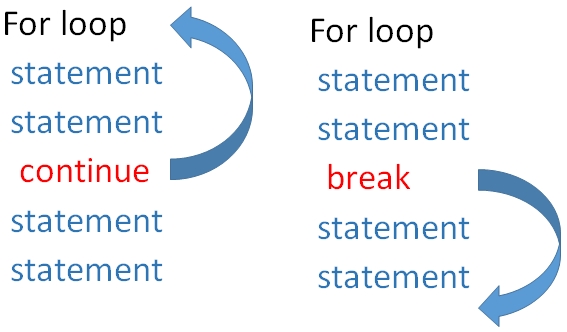
Inside the loop of we use break; satement then the execution will come out of the loop.
Example using break
    for (int i=0; i<5; i++) {

    	if ( i==3 ) {
    	break;
    	}

    	 System.out.println(i);
}0
1
2In the above code if System.out.println(i) is kept before the if condition check then how the output will change ?
If we use continue in place of break then the execution will skip further code ( after if ) and continue from beginning of the loop.
for (int i=0; i<5; i++) {

    	if ( i==3 ) {
    	continue;
    	}

    	 System.out.println(i);
}0
1
2
4Difference between break and continue
The execution stops and comes out of the loop once break statement is encountered. In case of continue, further execution of the code block is stopped and loop continues from starting of the loop.Java

Subhendu Mohapatra
Author & Instructor at plus2net
I write and maintain practical tutorials on Python, PHP, SQL, JavaScript, HTML, jQuery, and web development at plus2net. The tutorials focus on clear explanations, working examples, and code that readers can test and adapt while learning.
Connect:


This article is written by plus2net.com team.